

Starburst Foundation Profile

The Starburst Foundation is a nonprofit research institute based in Schenectady, New York and Athens, Greece.
It was incorporated in the state of Oregon in January of 1984 for the purpose of carrying out scientific research and public education directed to the betterment of humanity and the planet. The Foundation’s research activities are carried out with the intention of:
1. preserving and protecting the ecosystem of our planet from natural or man-made disturbances,
2. promoting technologies that would improve our everyday life, and
3. improving our understanding of ourselves as human beings and our comprehension of the universe of which we are an integral part.
Starburst serves as a vehicle through which donors may support high-quality leading-edge research necessary to mankind’s survival in this new age.
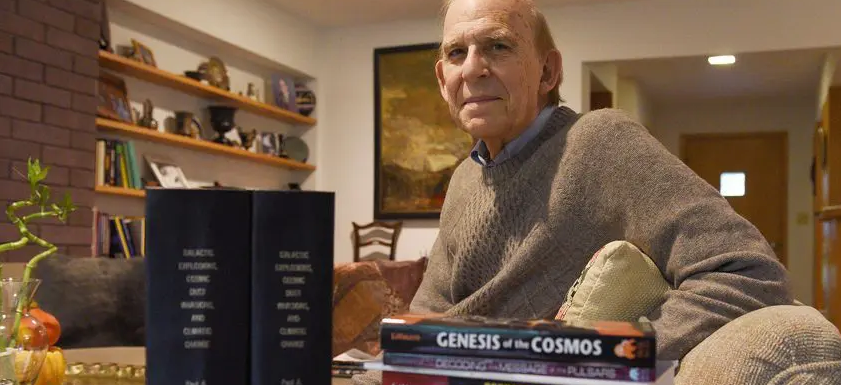
Astrophysicist Paul Alex LaViolette, PhD has passed away
8 November 1947 – 19 December 2022 (protothemanews.com) Paul Alex LaViolette, a Doctorate of Philosophy in Systems Science, was an astrophysicist, an inventor and a philosopher whose thinking was outside the box: a Renaissance Man. Dr. LaViolette was president of the Starburst Foundation under whose aegis he had been conducting interdisciplinary research in physics, astronomy, ecology, climatology, systems theory, psychology …
Click to read more
