
Subquantum Kinetics Articles

Subquantum Kinetics

Frontier Physics: Subquantum Kinetics

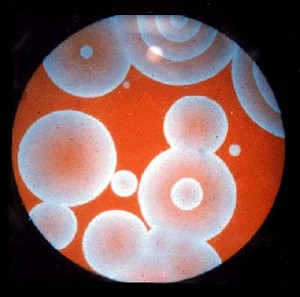
B-Z

Starburst conducts research on subquantum kinetics, a new microphysics methodology that has successfully solved many of the problems that presently confront physics and astronomy. Its approach was inspired from general system theory and from concepts that were originally developed to explain the formation of chemical wave patterns in certain nonlinear chemical reaction systems.
Click to read more

Subquantum Kinetics (nontechnical summary)

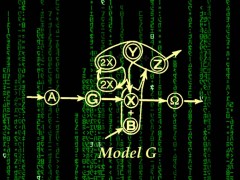
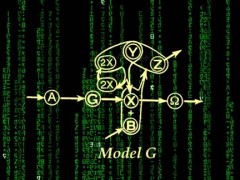
ModelG

Subquantum kinetics is a novel microphysics paradigm that incorporates concepts developed in the fields of system theory and nonequilibrium thermodynamics. One of its distinctive features is that it begins at the subquantum level for its point of departure.
Click to read more

SQK Cosmology

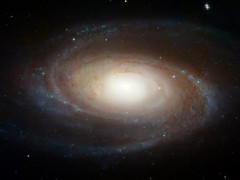
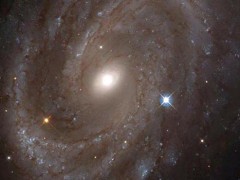
Hubble telescope image of M81(courtesy of NASA, ESA, and the Hubble Heritage Team)

Like other astrophysicists, Paul LaViolette once took the big bang theory on faith to be an accepted established fact. However, in 1978 he came to a juncture in which he had to know for sure whether the expanding universe hypothesis was really correct, or not. During the previous five years, he had been developing a unified field theory called subquantum kinetics whose aim was to explain the formation of material subatomic particles and by 1978 he had made an advance in this theory which indicated that for the theory to be correct photons would necessarily have to lose energy as they traveled through space, with this lost energy actually disappearing in a real sense from being present in the observable material universe.
Click to read more

Black Holes – Mother Stars

Gfield

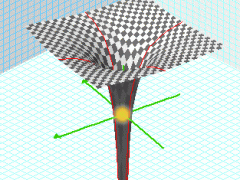
In the physics of subquantum kinetics the Galactic core is referred to as the Galaxy’s mother star. According to subquantum kinetics, it does not exist in the form of a point singularity, but as a very dense supermassive star having a density similar to a neutron star or hyperon star. This conclusion is supported by the following observations and verifications:
Click to read more

Tracing the Origins of Subquantum Kinetics

SQK-origins_1

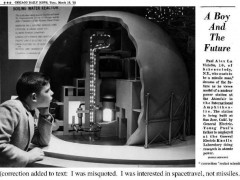
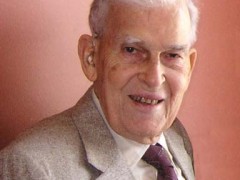
The fertile environment that both my parents provided, and in particular the early mentorship my father gave me, played an essential role in my ultimate development of subquantum kinetics. Below I will summarize how this unique family experience helped to facilitate the development of this important new approach to physics.
Click to read more

Forword to the book Subquantum Kinetics

Document-icon

Subquantum Kinetics Forword to the book   Midway through his undergraduate work in physics at Johns Hopkins, Paul became disenchanted with what he was being taught in class.  He had expected that physics would lay the foundation for a grand plan of nature, that it would provide a fundamental framework which would accommodate all of the sciences, coordinating them into …
Click to read more

Subquantum Kinetics Predictions

05-NGC4603

Superwave Theory Predictions and their Subsequent Verification in the fields of astronomy and physics
Click to read more

Early prediction of Pioneer anomaly challenges energy conservation law

pioneer

The “unexplained” phenomenon known as the “Pioneer effect” or as the “Pioneer anomaly” is a direct confirmation of the effect that LaViolette had sought. As LaViolette notes in his paper which appeared recently in the journal Physics Essays, the frequency blueshift observed in Pioneer spacecraft maser signal data was within two standard deviations of the amount he had predicted as early as 1980.
Click to read more

Do neutrinos break the speed of light limit? Is physics in crisis?

cern

On September 22nd scientists at CERN announced that they had clocked the speed of neutrinos over a 732 kilometer distance and found that surprisingly they travel at 0.0025% faster than the speed of light. So whereas light and electromagnetic waves of all frequencies are measured to travel about 300,000 kilometers per second, these neutrinos were found to travel at 300,006 kilometers per second, arriving at their destination about 60 nanoseconds sooner than expected.
These results call in question the validity of the special theory of relativity which holds that nothing can travel faster than the speed of light. Since relativity is a mainstay in the standard physics paradigm, a pillar on which the framework of contemporary physics theory has been constructed, these results threaten its collapse and with it the construct of relativistic cosmology.
Click to read more

  • Starburst Foundation Profile

    The Starburst Foundation is a nonprofit research institute based in Schenectady, New York and Athens, Greece.
    It was incorporated in the state of Oregon in January of 1984 for the purpose of carrying out scientific research and public education directed to the betterment of humanity and the planet. The Foundation’s research activities are carried out with the intention of:

    1. preserving and protecting the ecosystem of our planet from natural or man-made disturbances,
    2. promoting technologies that would improve our everyday life, and
    3. improving our understanding of ourselves as human beings and our comprehension of the universe of which we are an integral part.

    Starburst serves as a vehicle through which donors may support high-quality leading-edge research necessary to mankind’s survival in this new age.
  • Latest News

    Are we in Danger from a Local Interstellar Cloud Incursion?

    The solar system is currently embedded in the Local Interstellar Cloud, or Local Fluff as it is sometimes called, a gas cloud about 30 light years wide and travelling past us at 29 km per second. At this speed we should be going through it for the next 300,000 years. It has been suggested that this cloud may contain cloudlets having gas densities hundreds of times higher than the Local Interstellar Cloud average. How far away they may lie from the solar system or when they will impact us remains open to speculation. But, one might ask how likely it is that the solar system’s movement through such a high density region will affect the Sun and Earth, whether it will impact us in a way similar to how a superwave has done in the past?
    Click to read more